

 English


Comparison test of 3 soy waxes for pillars
Comparison Test of 3 Types
of Soy Wax for Pillar Candles
To celebrate the launch of the Season Soy PB, we conducted a comparison test of three types of pillar wax.
This test provides an opportunity to explore the unique characteristics of each wax,
focusing on their individual strengths rather than determining which is better or worse.
We encourage you to use this information to help create your desired candles.
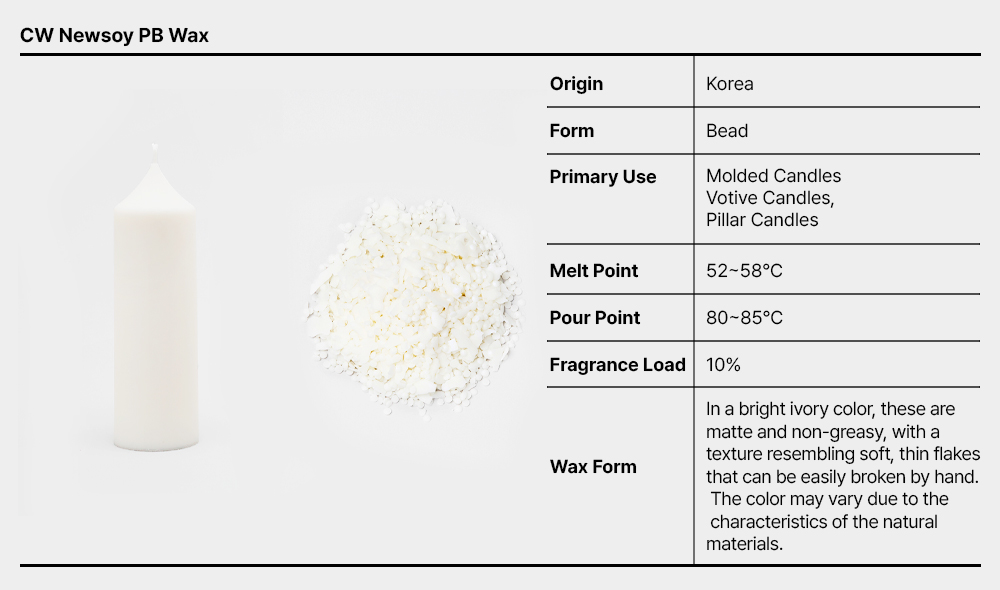
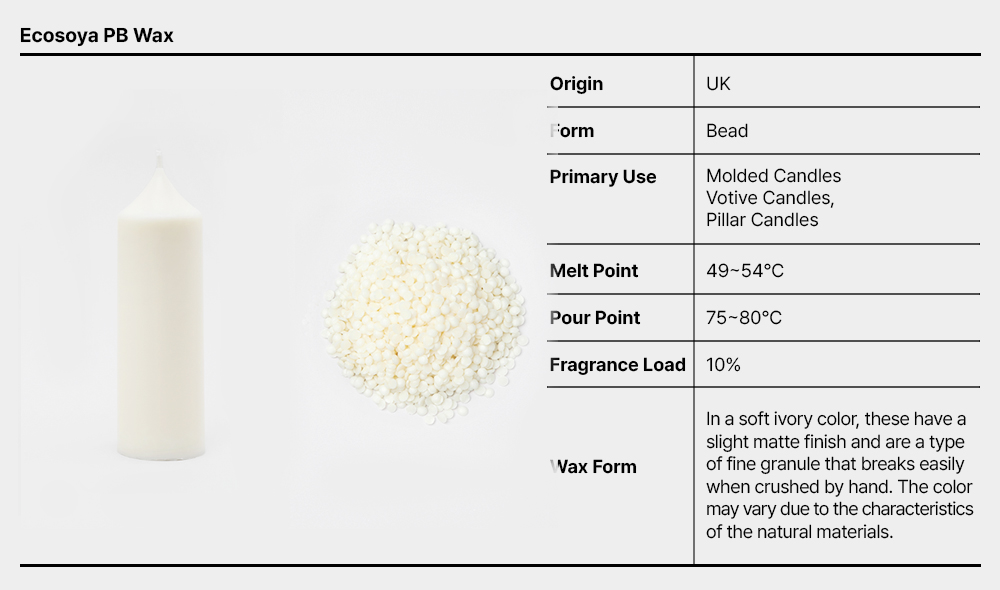
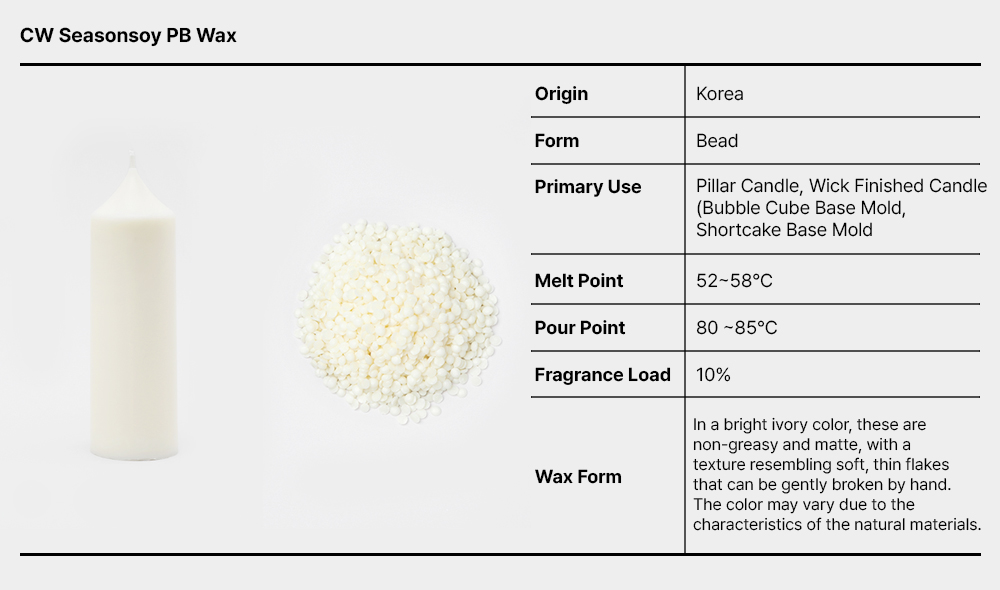
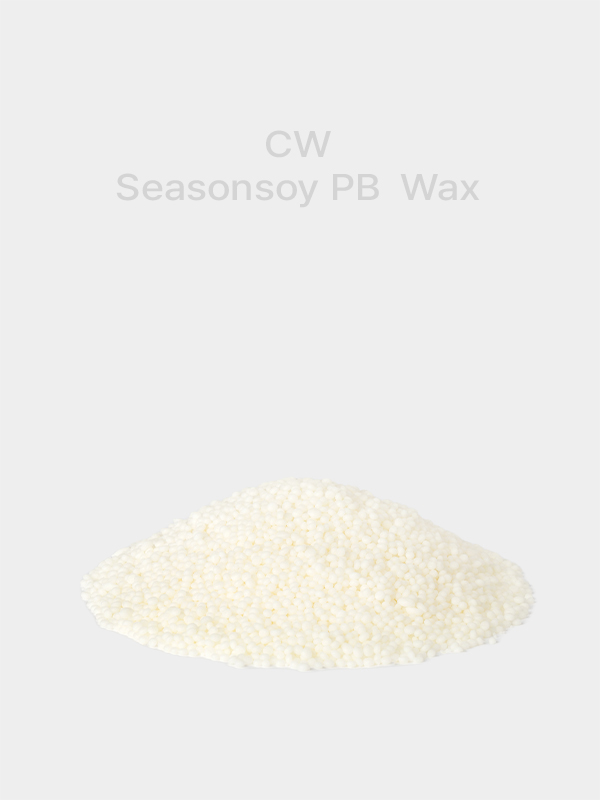
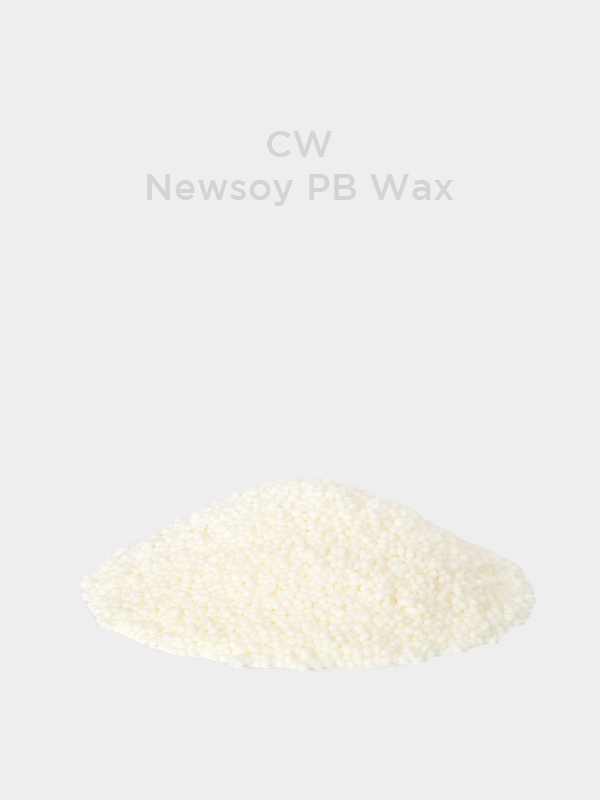
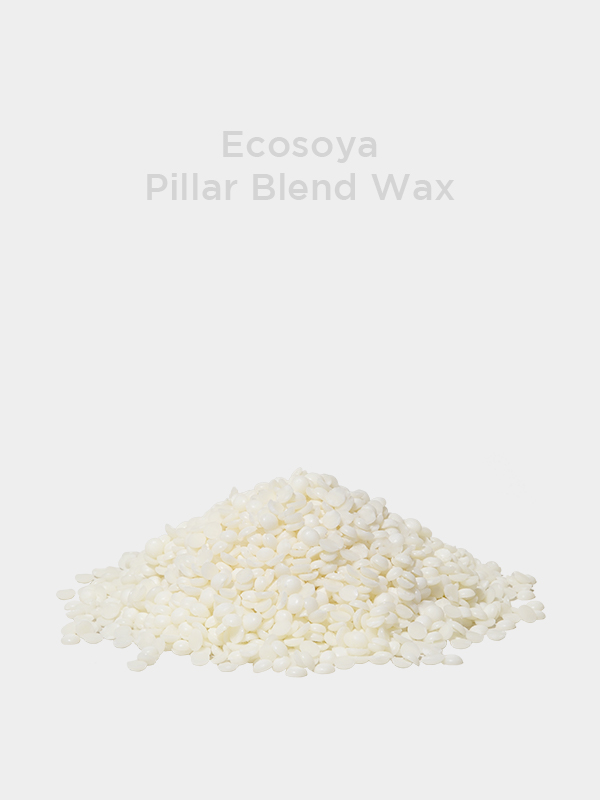
CW Pillar Wax: Three Types
These are three types of CW's pillar wax, formulated using 100% natural plant-based waxes with soy wax as the main ingredient. By comparing the shape, usage, melting point, pouring temperature, maximum fragrance load, and wax consistency of each type, you can select the wax that best suits your production needs.
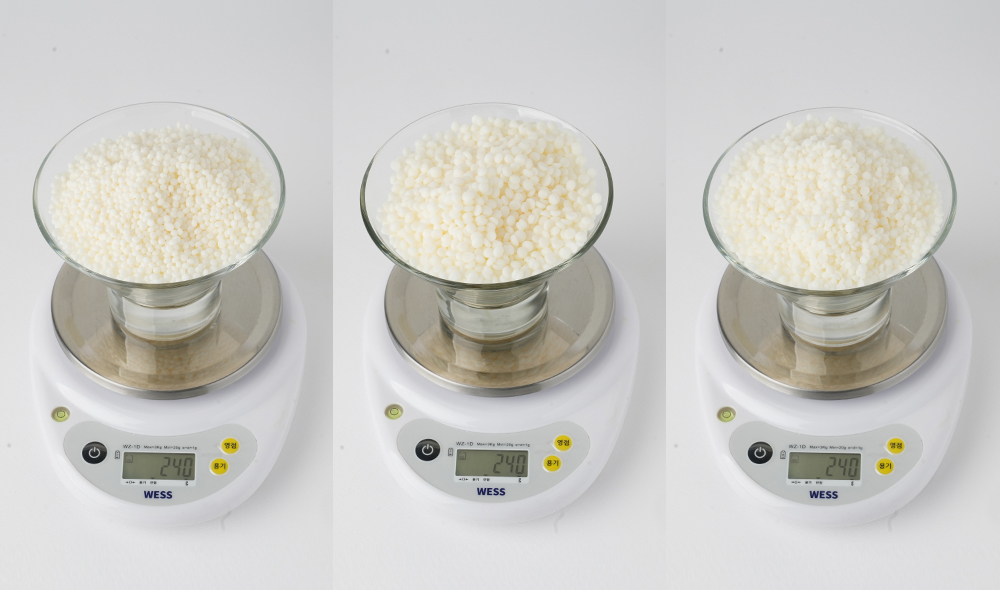
Wax Measurement
Using the #3 PC Dome Pillar Mold (5x17cm) as a standard, we measured 240g of each of the 3 types of pillar soy wax.
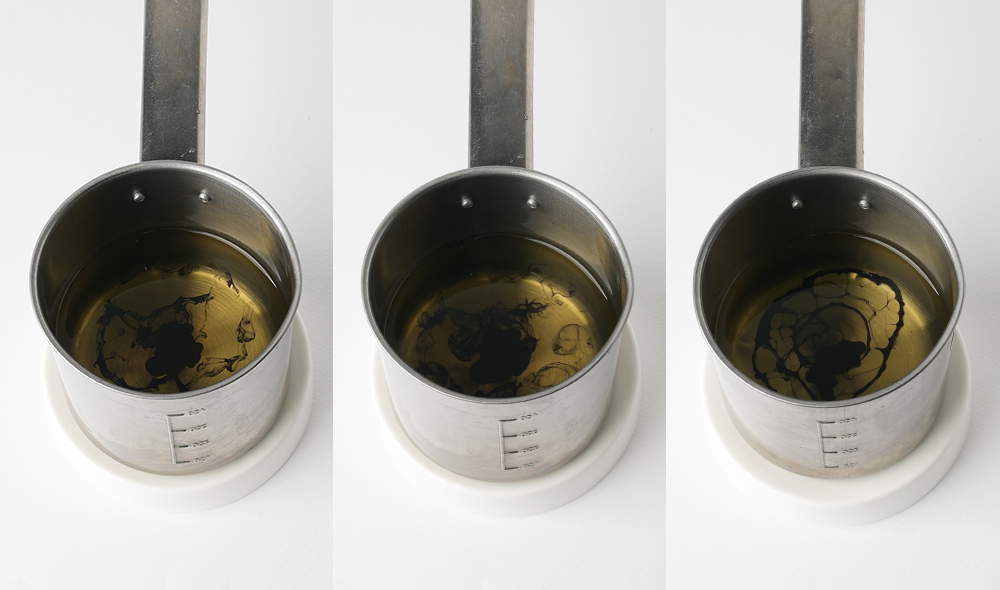
Color Blending
To compare the color development and frosting phenomena, we added 5 drops of 'black oil-soluble liquid dye' to the beaker containing the melted wax.
Adding Fragrance Oil
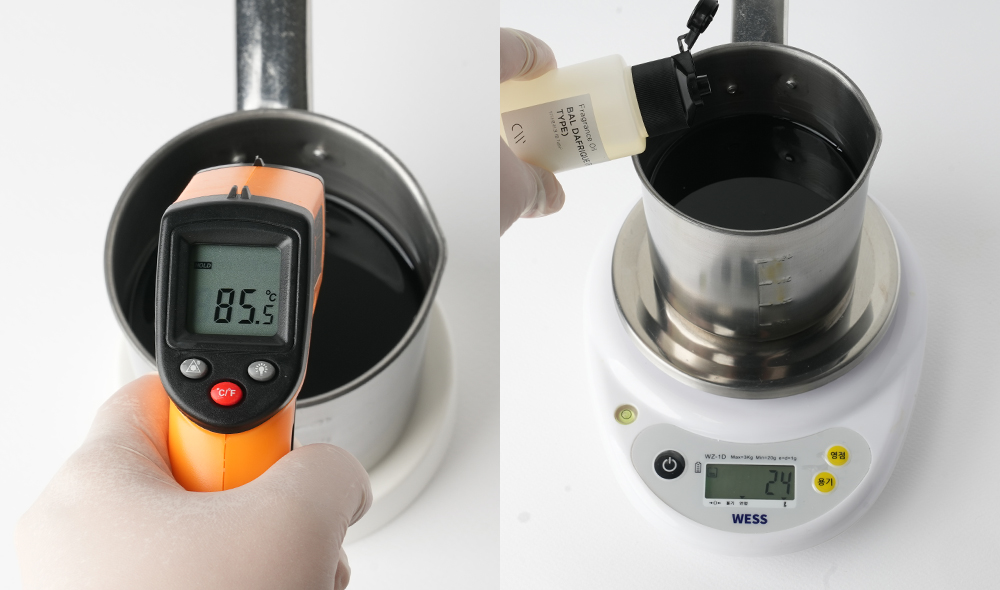
To test the softness and fragrance of the candle, we measured 24g of fragrance oil at a 10% fragrance load based on 240g of wax at approximately 85 degrees. We then added it to the blended wax and mixed well.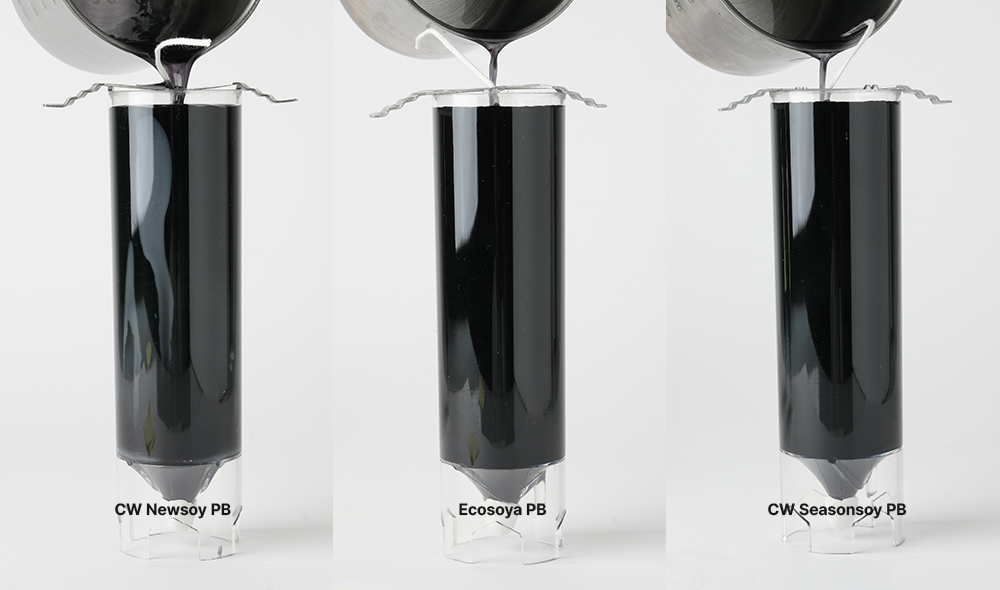
Pouring Wax into the PC Mold
When the temperature of the wax mixed with fragrance oil reached approximately 80 degrees, we poured it into the PC mold without preheating.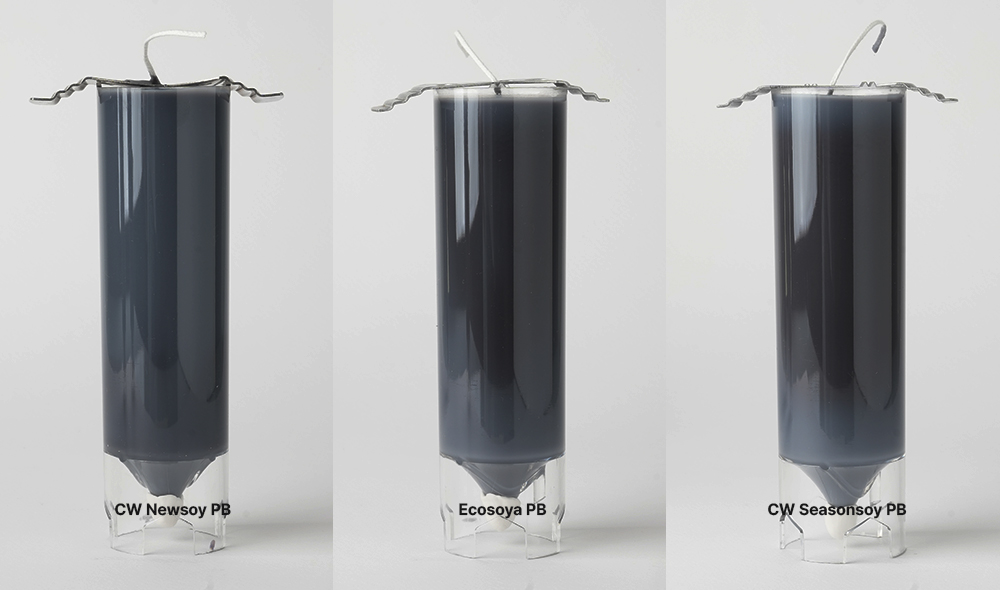
Observing the Solidification (1 Hour Later)
After 1 hour, the three types of wax showed similar results in terms of mold shrinkage and surface adhesion.
Observing the Solidification (2 Hours Later)
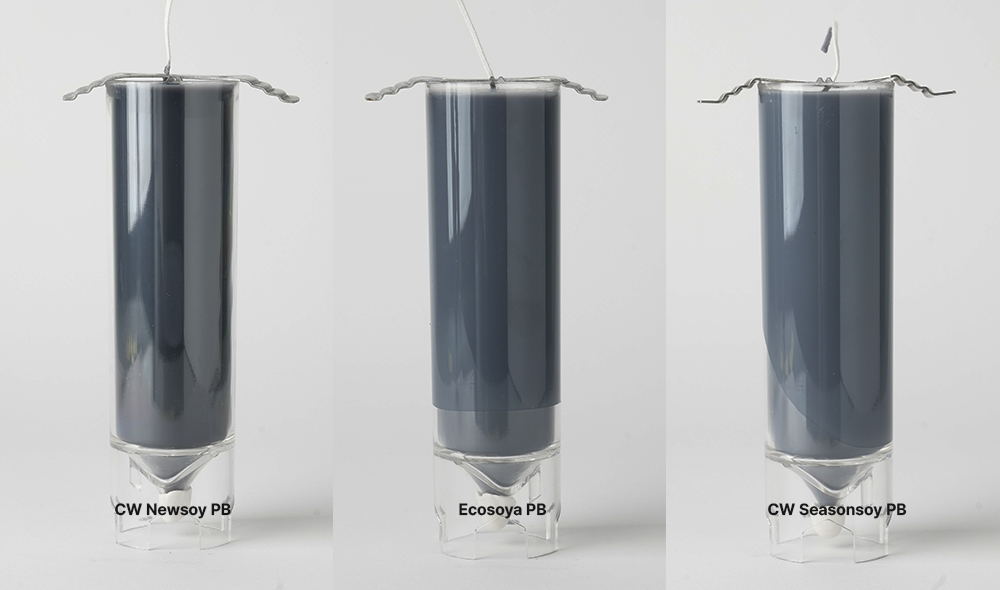
After 2 hours of observation, differences were noted among the various types of pillar soy wax.CW Newsoy PB Wax
This wax showed almost complete shrinkage in the mold, and the color development was the most intense among the three.
Ecosoya PB Wax
This wax was nearly shrunk in the mold, leaving only the bottom part, and the color appeared more muted compared to the initial state.
CW Seasonsoy PB Wax
Similar levels of shrinkage and color development were observed, comparable to the Ecosoya PB Wax.
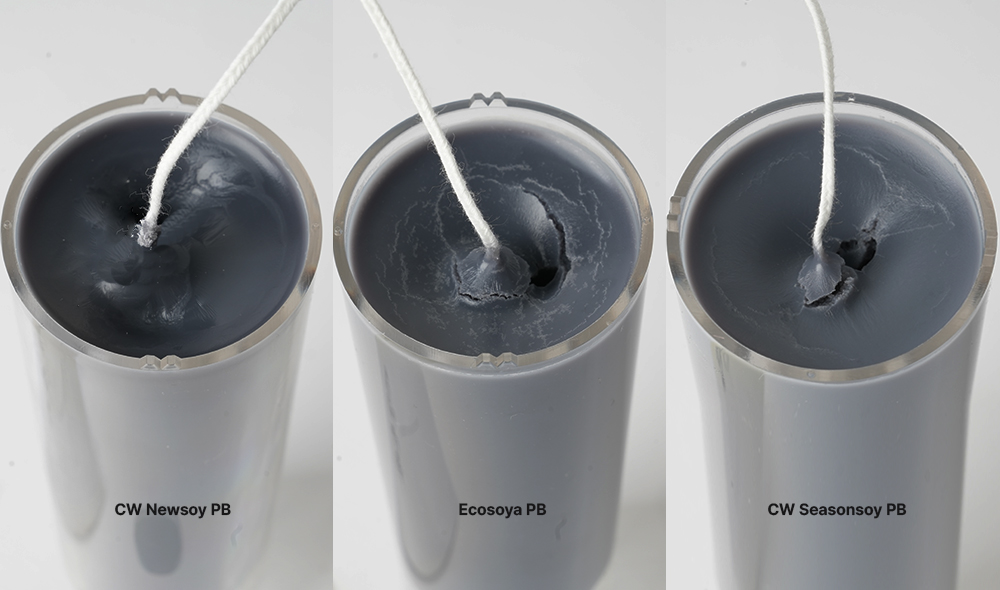
Shrinkage Comparison
Before the second pour, the shrinkage levels of the three types of season soy wax for pillar candles can be observed in the state after the first pour.CW Newsoy PB Wax
The shrinkage pattern was observed to be a dip on both sides, centered around the wick.
Ecosoya PB Wax
The shrinkage pattern showed a dip that was split in the center around the wick, creating a concave shape.
CW Seasonsoy PB Wax
The shrinkage pattern showed a concave shape on one side of the wick, and this was the wax that experienced the least amount of shrinkage.
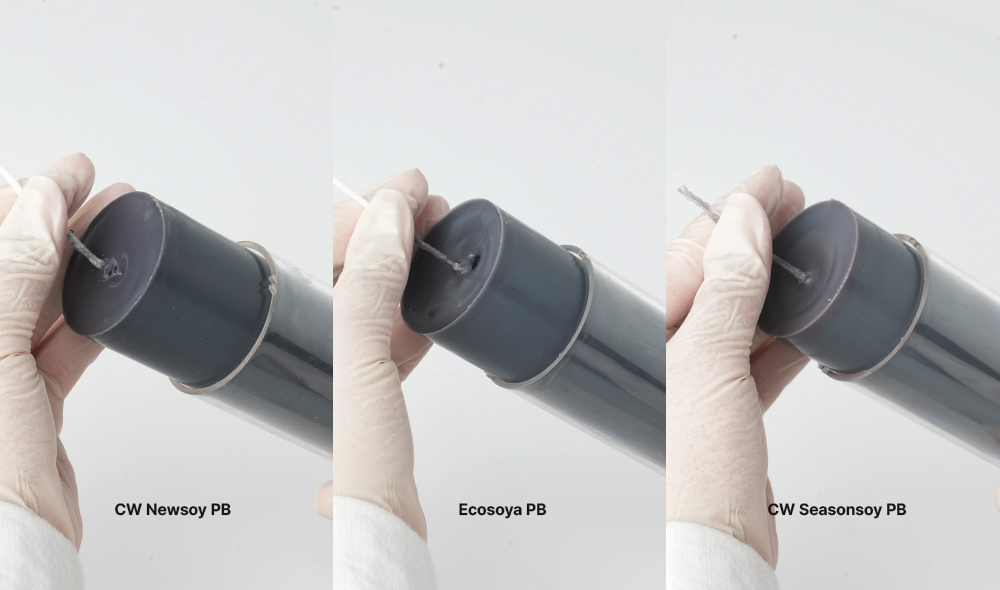
Mold Release Comparison
After 5 hours had passed and the candles were completely solidified (after the heat had dissipated), we proceeded with the mold release process. All three types of wax were easily released from the molds.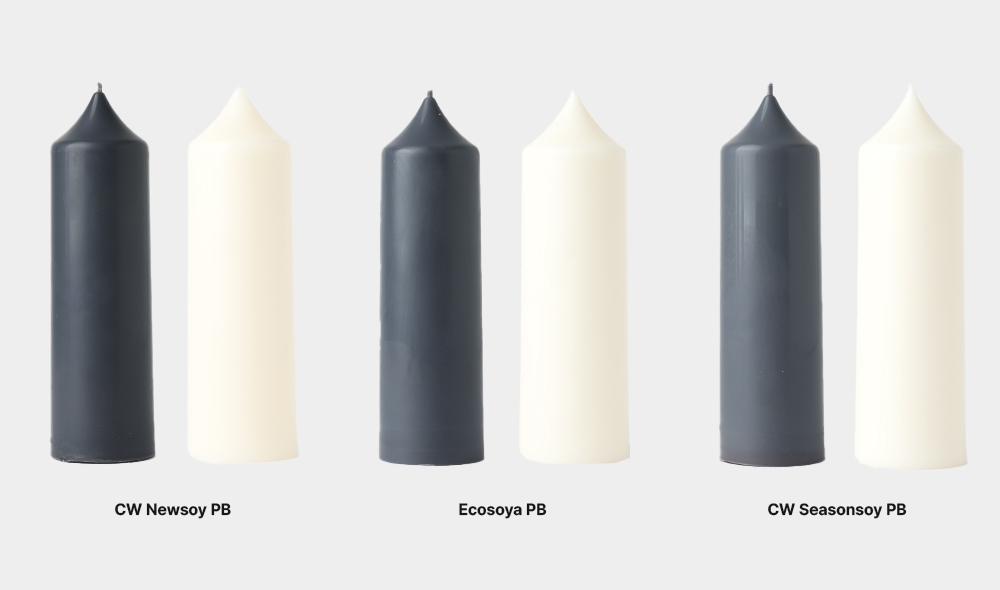
[Results] Color Development, Gloss, and Frosting
[Results] Comparison of Candles with 5 Drops of Black Oil-Soluble Liquid Dye and Wax OnlyCW Newsoy PB WaxThis wax showed the most vibrant results in terms of gloss and color development. However, slight frosting was observed in the colored candle after some time.
Ecosoya PB Wax
The candle made with uncolored wax displayed a gloss similar to that of CW Newsoy. However, the colored candle exhibited significant frosting, resulting in a reduced gloss appearance.
CW Seasonsoy PB Wax
Similar results were observed compared to the Ecosoya PB Wax. In the colored candle, it was noted that frosting was less pronounced than in the Ecosoya PB Wax.
※ Please note that the frosting and gloss levels may vary depending on the fragrance oil used, the season of production, and the environmental temperature during the creation process. We recommend using this information to guide your testing process.
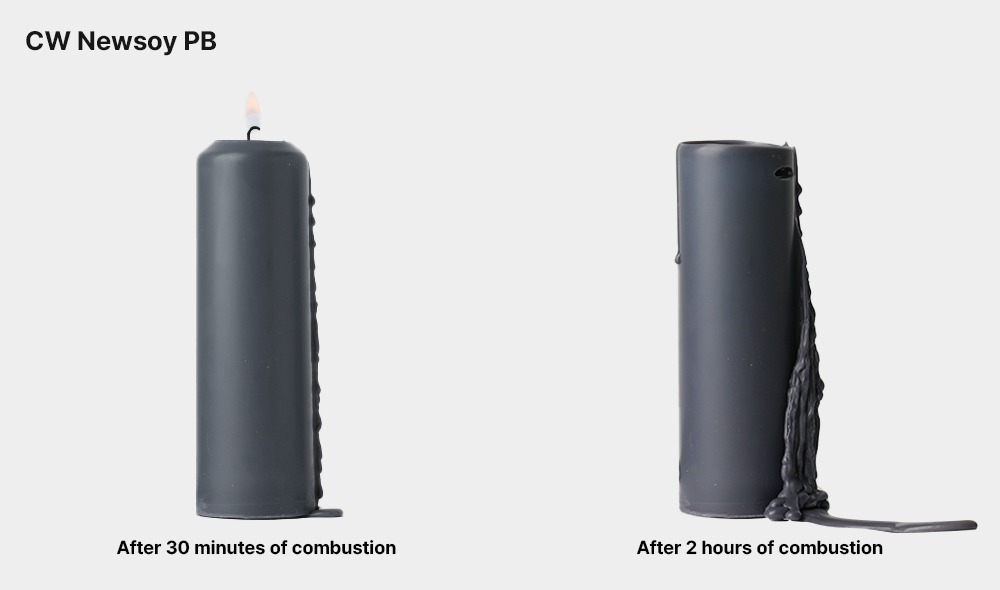
[Results] CW Newsoy PB Combustion
* Condition 1: The combustion results after [30 minutes] and [2 hours] are based on a #2 white cotton wick. The combustion test was conducted after completing the second pour.** Condition 2: Typically, the wick length is adjusted to prevent rapid combustion; however, for this test, the wick and flame size were kept consistent.
CW Newsoy PB Wax was observed to burn the slowest at both [30 minutes] and [2 hours].
The fragrance was noted to be subtle.
[Results] Ecosoya PB Combustion
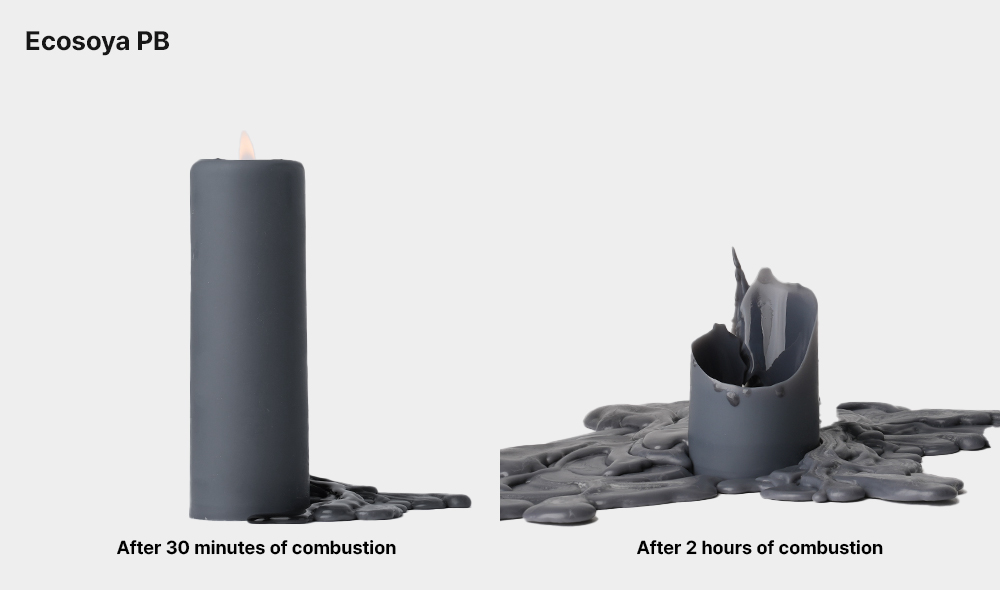
* Condition 1: The combustion results after [30 minutes] and [2 hours] are based on a #2 white cotton wick. The combustion test was conducted after completing the second pour.** Condition 2: Typically, the wick length is adjusted to prevent rapid combustion; however, for this test, the wick and flame size were kept consistent.
Ecosoya PB Wax showed similar combustion characteristics among all three types after [30 minutes],
but distinct differences were observed after [2 hours]. The fragrance strength was noted to be quite strong.
[Results] CW Seasonsoy PB Combustion
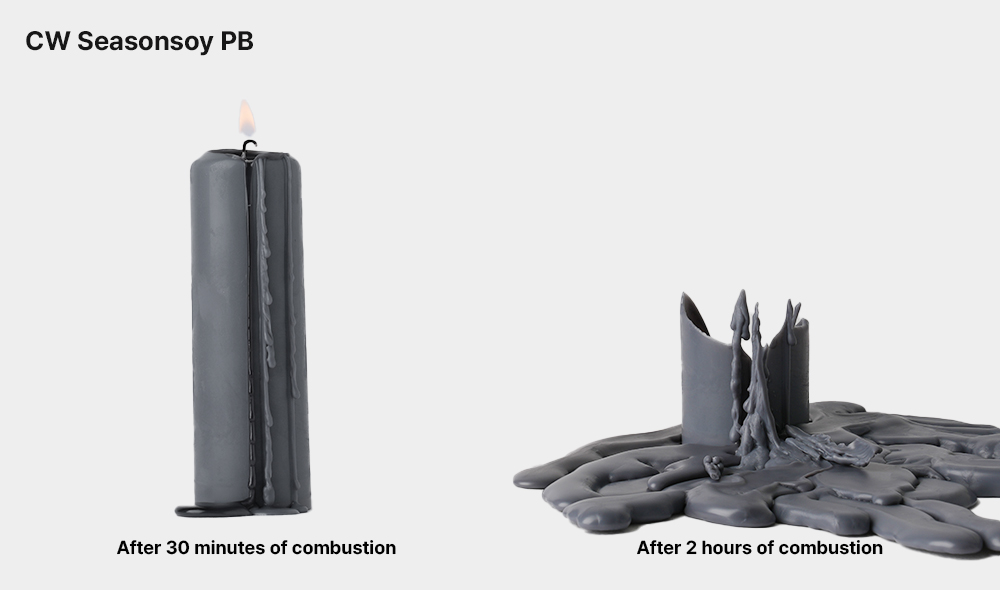
* Condition 1: The combustion results after [30 minutes] and [2 hours] are based on a #2 white cotton wick. The combustion test was conducted after completing the second pour.** Condition 2: Typically, the wick length is adjusted to prevent rapid combustion; however, for this test, the wick and flame size were kept consistent.
CW Seasonsoy PB Wax exhibited the fastest combustion among the three types of wax, with fragrance strength falling between that of Ecosoya PB and Newsoy PB.
Final Results of the Pillar Soy Wax Comparison Test
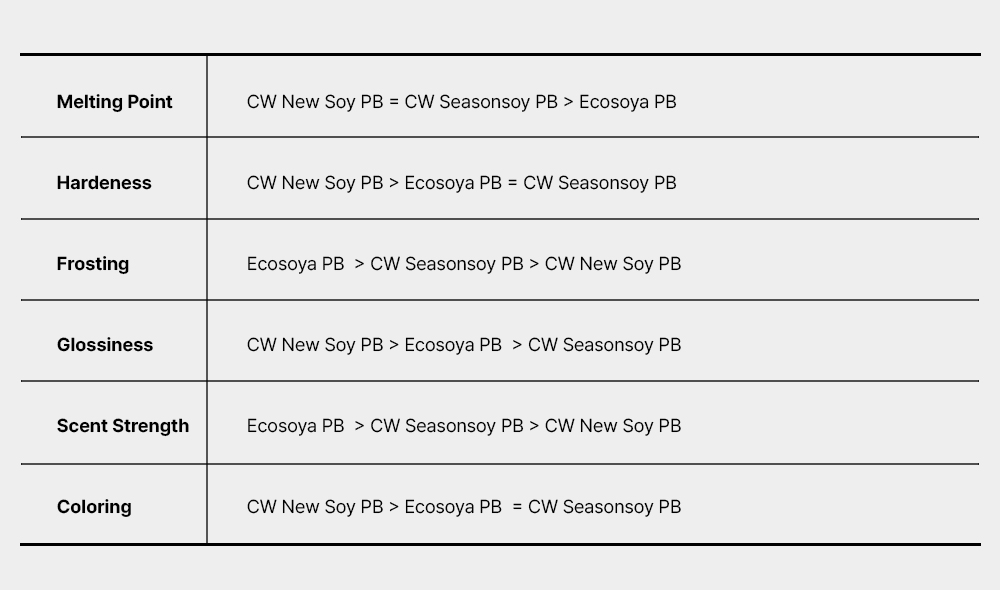
Here are the results of the melting point, strength, frosting phenomenon, gloss, fragrance strength,
and color development tests for the three types of CW pillar soy wax.
Please use this information to guide your creative activities, tailoring them to the season and your specific projects.


This content is copyrighted by Chromaworks Inc. and may not be used commercially without permission.
DIY Items
필라용 소이왁스 3종 비교 테스트
-
8.46 (USD)
CW Seasonsoy PB Wax (for Pillars)
1kg × 1 EA
-
9.62 (USD)
CW Newsoy PB Wax (for Pillars)
1kg × 1 EA
-
9.62 (USD)
Ecosoya Pillar Blend Wax *To be discontinued
1kg × 1 EA
-
17.62 (USD)
Bal Dafrique (B Type)
100ml × 1 EA
-
15.77 (USD)
Wess Digital Electronic Scale (WZ-1D) 1g/3kg
1pc × 1 EA
-
11.38 (USD)
Infrared Digital Thermometer
1pc × 1 EA
-
0.92 (USD)
Glass Rod
1pc × 1 EA
-
8.07 (USD)
Stainless Pot 650ml
1 pc × 3 EA
-
20.54 (USD)
#3 PC Dome Pillar Mold (5x17cm)
3pcs × 1 EA
Related Products
Related products